New Home Checklist
Organizing a move can be overwhelming, but a well-structured New Home Checklist can transform the process into a smooth and stress-free experience. Designed with both functionality and aesthetics in mind, this checklist is more than just a to-do list—it's a visual tool that enhances clarity and efficiency. Whether you're moving into a new house or an apartment, having a clear plan ensures nothing is overlooked.
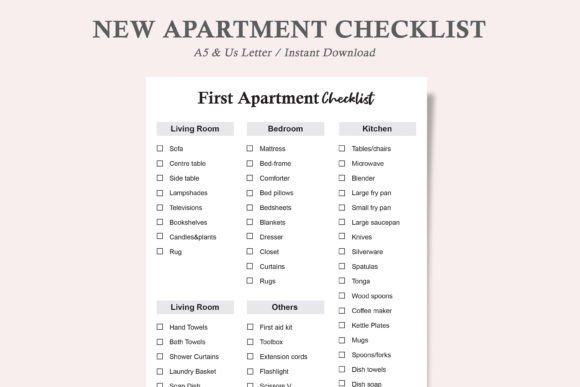
The New Home Checklist comes in a printable PDF format, available in A5 and US Letter sizes, making it adaptable for different needs. Its minimalist design prioritizes readability and ink efficiency, ensuring it remains a practical resource throughout your move. With two versions and sizes, it offers flexibility for personalization while maintaining a professional appearance.
Visual Design and Usability
From a graphic design perspective, the New Home Checklist exemplifies how visual elements can enhance usability. The clean layout and structured formatting support visual hierarchy, guiding users through tasks logically. This approach not only improves user experience but also aligns with modern design principles that emphasize simplicity and clarity.
Typography plays a key role in this checklist. A legible font choice ensures that information is easy to read, even when printed. The use of consistent spacing and alignment reinforces a sense of order, which is essential for effective communication. These details contribute to a polished look that reflects professionalism and attention to detail.
Applications in Creative Projects
While primarily a moving tool, the New Home Checklist can serve as inspiration for various creative projects. For instance, designers working on branding or marketing materials can draw from its structure to create engaging layouts. The checklist’s emphasis on organization and clarity can translate into compelling presentations, editorial designs, or social media content.
In UI and web design, the principles behind the checklist—such as clear task categorization and intuitive navigation—can inform better user interactions. Similarly, in packaging design, the same logic applies: a well-organized layout helps users quickly find what they need, enhancing overall usability.
Key Considerations for Designers
When incorporating elements like the New Home Checklist into larger design systems, consistency is crucial. Maintaining a unified color palette, typography, and layout ensures that all assets work cohesively. This is especially important for brand identity, where visual coherence strengthens recognition and trust.
Readability should never be compromised. Even in a minimalist design, text must remain legible across different mediums and sizes. Scalability is another factor—whether printed or digital, the checklist must retain its effectiveness without losing clarity.
For marketers and creators, the checklist serves as a reminder of the importance of thoughtful design. Every element, from color choices to composition, impacts how information is received. By applying these principles to other projects, designers can elevate their work and deliver more impactful results.
The New Home Checklist is more than a practical tool; it's a testament to how design can simplify complex processes. Whether used for personal organization or as a reference for creative projects, its value lies in its ability to merge function with form. By focusing on clarity, consistency, and usability, it sets a standard for effective visual communication in any context.